Workforce Evolution Planning: Building a Future-Ready Workforce in a World of AI and Change
Why the organizations winning the talent race aren't just planning for headcount—they're building the capabilities to adapt before disruption hits.


Contents
- 01 What is Workforce Evolution Planning?
- 02 Why Workforce Evolution Planning is Different from Traditional Workforce Planning
- 03 The Key Shifts Shaping Workforce Evolution Planning
- 04 Core Components of the Workforce Evolution Planning Process
- 05 How Workforce Evolution Planning Supports Strategic Workforce Planning
- 06 Outcomes: Resilience, Agility, and Competitive Advantage
- 07 Making Workforce Evolution Planning Real
If there’s one thing the last few years have taught us, it’s that the only constant in the world of work is change itself. And not the slow, predictable kind—we’re talking about seismic shifts that can transform entire job categories before your annual planning cycle even wraps up. The World Economic Forum’s Future of Jobs Report 2025 projects that 170 million new jobs will be created globally by 2030, while 92 million will be displaced. That’s a net gain of 78 million jobs, but hidden in that optimistic number is a massive reshuffling of skills, roles, and ways of working.
For CHROs navigating this landscape, traditional workforce planning just isn’t cutting it anymore. It’s time for something more dynamic, more strategic, and more human-centered: workforce evolution planning.
What is Workforce Evolution Planning?
Workforce evolution planning is a proactive approach to align an organization’s talent with its evolving strategic goals and technological advancements. This planning helps prepare the workforce for future demands – not just next quarter’s headcount needs, but the fundamental shifts in skills, roles, and work design that will define competitive advantage in the years ahead.
Think of it as workforce planning’s more forward-thinking sibling. Where traditional workforce planning asks “How many people do we need to fill these roles?”, workforce evolution planning asks “What work needs to be done, what capabilities will we need to do it, and how do we build a workforce that can continuously adapt as those answers change?”
This shift matters more than ever. According to the World Economic Forum, employers expect 39% of workers’ core skills to change by 2030. That’s not a statistic you can address with annual headcount forecasting and reactive hiring.
Why Workforce Evolution Planning is Different from Traditional Workforce Planning
The main difference between workforce evolution planning and traditional workforce planning is the fundamental unit of analysis and the time horizon of impact. Traditional workforce planning typically focuses on jobs and headcount with a one-year outlook. Workforce evolution planning focuses on skills, tasks, and outcomes with a continuous, adaptive approach.
Moving Beyond Filling Immediate Vacancies
Let’s be honest: most workforce planning today is really just sophisticated vacancy management. Gartner research reveals that only 15% of organizations are engaging in true strategic workforce planning. Meanwhile, 61% of HR managers say they only plan the headcount they need for the coming year.
Workforce evolution planning breaks free from this reactive cycle. Instead of asking “Who do we need to hire to backfill this role?”, it asks “What capabilities will this part of our business need in three years, and how do we start building them now?”
From an HR Activity to a Cross-Functional Business Capability
Traditional workforce planning often lives in HR, siloed from the strategic conversations happening in the C-suite. Workforce evolution planning, by contrast, requires deep integration with business strategy, finance, and technology leadership. McKinsey’s research emphasizes that HR must work in tandem with finance, connecting workforce planning to financial planning rather than treating it as a walled-off HR exercise.
The organizations getting this right treat workforce evolution as a business capability, not an HR process. They’re seeing results: S&P 500 companies that excel at maximizing their return on talent generate 300% more revenue per employee compared with the median firm.
The Key Shifts Shaping Workforce Evolution Planning
From Jobs and Headcount to Skills, Tasks, and Outcomes
Here’s a reality check from Deloitte’s Human Capital research: 71% of workers already perform work outside the scope of their job descriptions, and only 24% report they do the same work as others with the same job title. Even more telling? Only 19% of business executives say work is best structured through jobs.
The job, as a unit of organization, is becoming obsolete. Workforce evolution planning embraces this reality by focusing on the fundamental building blocks of work: skills, tasks, and ultimately, outcomes. This shift enables far greater agility—you can redeploy skills to emerging needs without waiting for formal restructuring.
AI and Technology as Collaborators
The conversation has moved beyond “Will AI replace jobs?” to “How do humans and AI work together most effectively?” McKinsey research shows that up to 30% of current worked hours could potentially be replaced through automation by 2030. But the smart organizations aren’t just thinking about replacement—they’re thinking about augmentation.
Workforce evolution planning treats AI as part of the workforce ecosystem. It asks: Which tasks are best suited for automation? Which require human judgment? How do we design work that leverages the strengths of both? For a deeper dive into making this collaboration work, explore our guide to AI and human collaboration in the workforce.
Adaptive Planning Through Continuous Scenario Modeling
Annual planning cycles can’t keep pace with quarterly disruptions. Deloitte’s future of workforce planning research emphasizes the need to plan not for the future, but for many possible futures. This means building scenario modeling capabilities that can quickly assess how different market conditions, technology changes, or strategic pivots would affect your workforce needs.
The most resilient organizations are moving from point-in-time planning to continuous sensing and adaptation, treating workforce planning as an always-on capability rather than an annual event.
Designing for Human Outcomes
Workforce evolution planning isn’t just about organizational efficiency; it’s about creating conditions where people can thrive. The 2025 Deloitte Human Capital Trends report found that 74% of workers, managers, and executives say it’s critically important to prioritize human capabilities.
This means factoring employee well-being, skill growth opportunities, and job security into workforce decisions—not as nice-to-haves, but as core design principles. PwC’s Global Workforce Survey found that workers who are confident about their job security are 51% more motivated than peers lacking such confidence. Workforce evolution planning that ignores the human experience is planning for attrition.
Insight-Led Talent Decisions
Gut instinct and spreadsheets won’t cut it anymore. Workforce evolution planning requires real-time visibility into your current skills inventory, market intelligence about emerging skill demands, and predictive analytics that can surface risks and opportunities before they become obvious.
According to PwC, 86% of CHROs are now increasing investment in skills-based talent architecture. The leaders are moving from describing what happened (descriptive analytics) to predicting what will happen (predictive analytics) to prescribing what should happen (prescriptive analytics).
Core Components of the Workforce Evolution Planning Process
Audit the Current Workforce
You can’t evolve what you don’t understand. Start with a comprehensive skills inventory that goes beyond job titles to capture actual capabilities—including the hidden skills employees have but aren’t using in their current roles. Deloitte’s research on hidden workforce capabilities suggests that organizations may be overlooking significant capacity by focusing only on what’s visible.
Forecast Future Needs (Including Different Scenarios)
Connect workforce forecasting directly to business strategy—and build in flexibility for uncertainty. What skills will you need if your AI transformation accelerates faster than planned? What if a key market shifts? McKinsey’s strategic workforce planning approach emphasizes translating business drivers into demand for skills and capabilities across five-to-ten year horizons.
Identify Talent and Skills Gaps
Compare your current state to your future needs to surface gaps. The World Economic Forum reports that 63% of employers already cite skills gaps as the key barrier they face. Getting specific about where those gaps are—and how critical they are to strategy execution—enables targeted action.
Build Action Plans
Once you’ve identified gaps, determine the optimal mix of strategies to close them: recruit externally for specialized skills, upskill and reskill existing talent, develop succession pipelines for critical roles, and leverage flexible workforce models where appropriate. According to the World Economic Forum, 77% of employers plan to prioritize upskilling workers—the most common workforce strategy for 2025-2030.
Implement, Monitor KPIs, and Adjust Continuously
Workforce evolution planning isn’t a one-and-done exercise. Establish KPIs that track progress against your capability-building goals, monitor leading indicators that might signal needed course corrections, and build in regular review cycles that are more frequent than annual. Gartner recommends that strategic workforce plans require maintenance more frequent than annual reviews to stay relevant as business needs shift.
How Workforce Evolution Planning Supports Strategic Workforce Planning
Using Evolution Planning to Operationalize Long-Term Workforce Strategy
Strategic workforce planning sets the vision; workforce evolution planning makes it real. Where strategic planning might identify that your organization needs to become more digitally capable over the next five years, evolution planning translates that into specific skill development programs, hiring strategies, and organizational changes—with clear milestones and accountability.
Think of strategic workforce planning as the architect’s blueprint and workforce evolution planning as the construction management that turns vision into reality, adapting to conditions on the ground while keeping the end goal in sight.
Feeding Insights, Scenarios, and Skills Data into SWP Decisions
The relationship flows both ways. Workforce evolution planning generates rich data about skills availability, development velocity, and emerging capability gaps that should inform strategic decisions. When your evolution planning reveals that a critical capability is taking longer to build internally than anticipated, that insight should feed back into strategic choices about partnerships, acquisitions, or strategic pivots.
Outcomes: Resilience, Agility, and Competitive Advantage
When workforce evolution planning is done well, the outcomes are transformative:
- Resilience: Your organization can absorb shocks—market disruptions, technology shifts, competitive threats—because you’ve built adaptive capacity into your workforce. You’re not scrambling to hire when needs emerge; you’ve anticipated them.
- Agility: You can move talent to opportunities faster because you understand your skills inventory at a granular level and have built the internal mobility mechanisms to redeploy people effectively.
- Competitive advantage: As McKinsey’s research shows, individuals who are top performers in highly critical roles deliver 800% more productivity than average performers. Workforce evolution planning helps you identify those critical roles, ensure they’re filled with top talent, and build pipelines to sustain that advantage.
Perhaps most importantly, workforce evolution planning positions your people as partners in transformation rather than subjects of it. When employees see clear development pathways, understand how their skills connect to the organization’s future, and have agency in their own evolution, engagement and retention follow.
Making Workforce Evolution Planning Real
The shift from traditional workforce planning to workforce evolution planning isn’t just a nice idea; it’s becoming a competitive necessity. But making it real requires moving from conceptual frameworks to operational capabilities, from annual exercises to continuous intelligence.
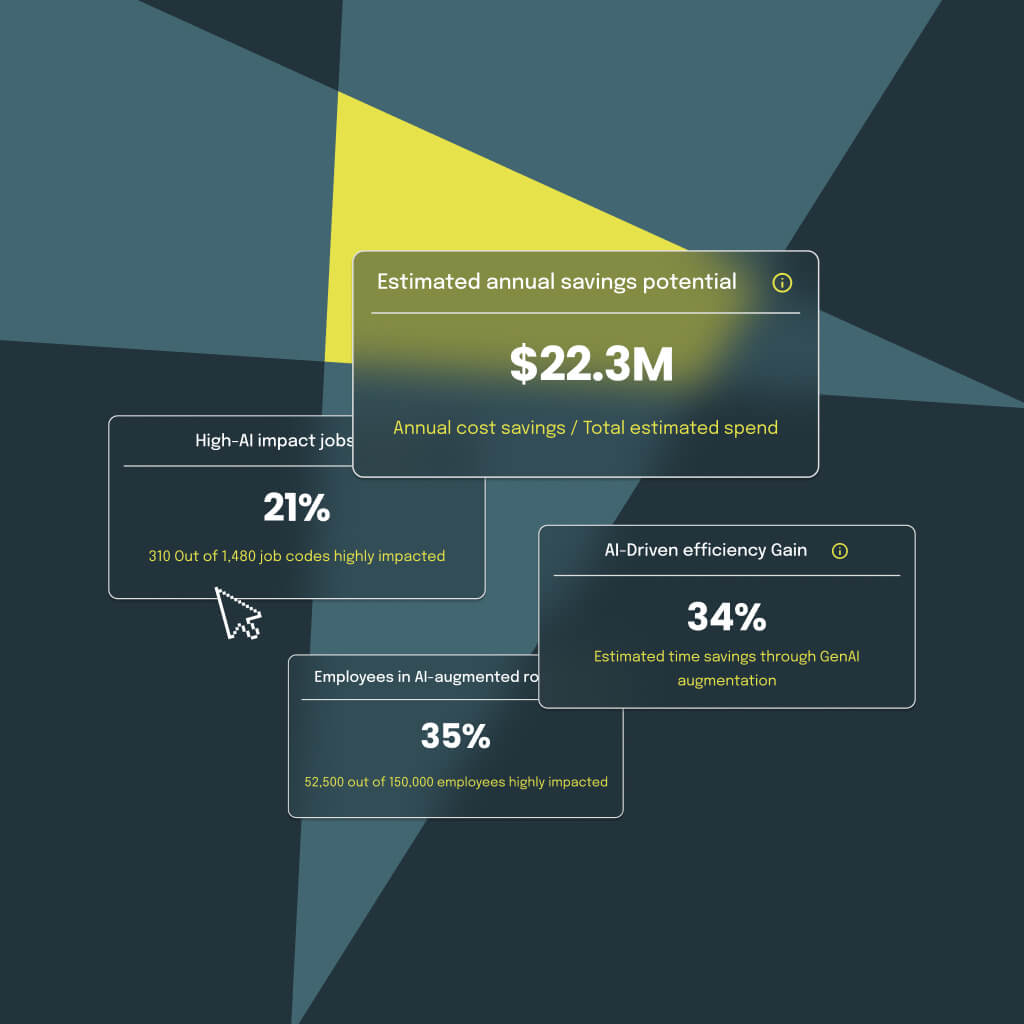
Gloat Signal gives CHROs the workforce intelligence foundation that workforce evolution planning demands. With AI-powered analysis of how work is changing, which skills are emerging, and where your workforce stands today versus where it needs to be, Signal transforms workforce evolution planning from aspiration to action.
Stop planning for the workforce you have. Start building the workforce you’ll need. Try Gloat Signal and discover how data-driven workforce intelligence can help you turn strategic vision into competitive reality—one skill, one capability, one evolution at a time.