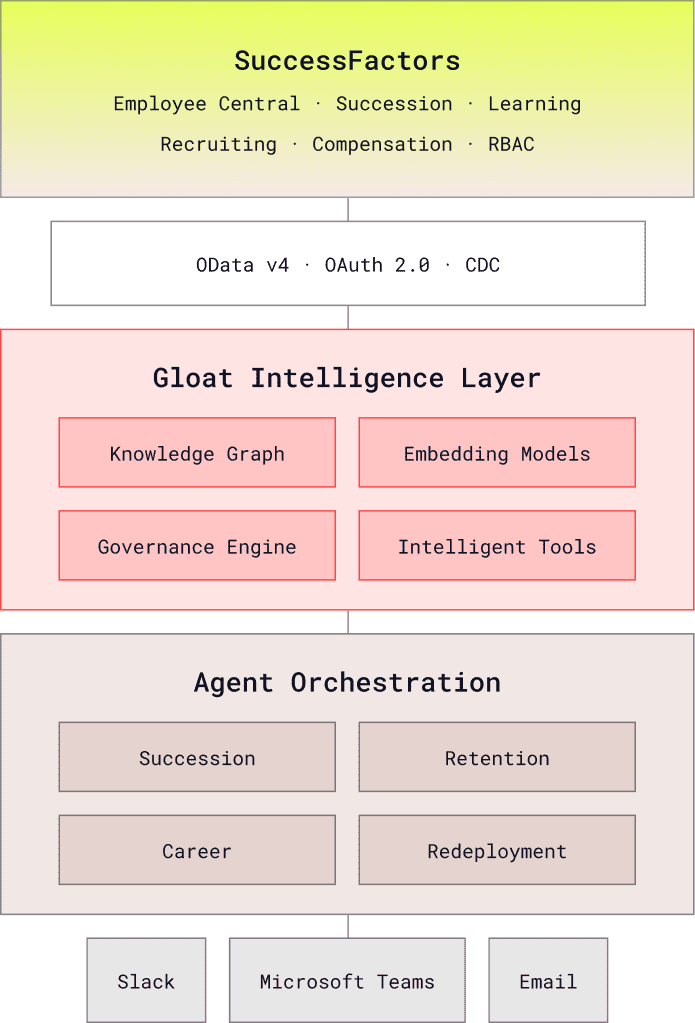
SuccessFactors holds your workforce data, org structure, and years of configured governance. Gloat agents put it to work—building succession pipelines, catching flight risks, coaching careers—delivered where your people already are.
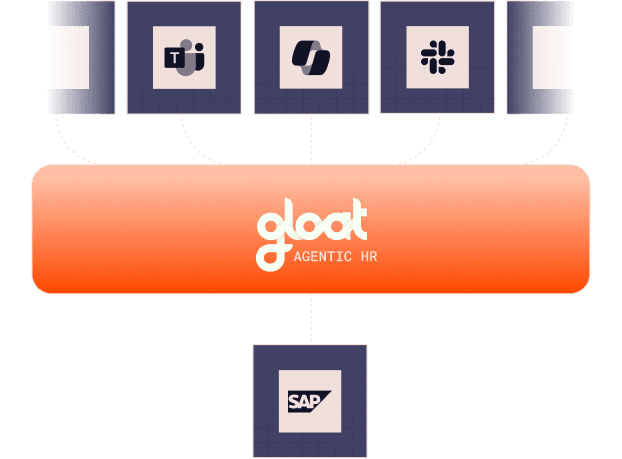
SuccessFactors captures the data. It runs the transactions. But data sitting in a system of record doesn't prevent attrition, fill critical roles faster, or coach employees through transitions.
Succession reviews
Annual calibration cycles. By the time data is reviewed, top talent has already moved on.
Flight risk visibility
Attrition signals exist in the data but nothing monitors them continuously. You learn when they resign.
Career conversations
Development discussions happen on a schedule, not when employees need them. The best don’t wait.
Redeployment matching
Restructuring relies on spreadsheets and memory. Good people end up on severance lists while matching roles sit open.
Intelligent agents that read your SuccessFactors data, respect your governance, and act—before problems become crises.
Succession reviews happen once a year
By calibration time, two high-potentials have left. Critical roles sit open for months.
Agents monitor readiness daily. When a role opens, you know who's ready—and who needs three months of development.
Flight risk surfaces too late
You learn someone's leaving when they resign. Exit interviews reveal fixable problems.
Agents detect disengagement weeks early. Managers get nudges while there's still time to act.
Career conversations wait for reviews
Employees hear about growth annually. The best don't wait—they find opportunities elsewhere.
Every employee gets an always-on career coach. Opportunities surface in the moment, not on a schedule.
Restructuring loses talent
Good people land on severance lists because matching is manual and slow.
Agents match displaced employees to open roles in hours. Talent stays. Severance costs drop.
Your SuccessFactors environment isn't just data. It's years of decisions—approval chains, permissions, business rules, eligibility criteria. Gloat agents read this configuration and operate within it. No shadow processes. No end-runs.
Promotions, transfers, compensation changes—each has approval chains you've configured over years. Agents inherit them. Every recommendation respects your routing rules.
Your SuccessFactors role-based permissions define who sees what. Agents honor them. Managers see their teams. Employees see their own data. No exceptions.
Eligibility criteria, waiting periods, geographic constraints—all captured in SuccessFactors. Agents read them. Recommendations comply automatically.
reduction in regrettable attrition
Proactive retention actions
faster time-to-fill for critical roles
Always-current succession pipelines
increase in internal mobility
Visible paths, actionable next steps
redeployment rate in restructuring
Skills-based matching at speed
Gloat connects to SuccessFactors through its native OData v4 APIs. We read your workforce data, org hierarchy, and governance configuration—then build a semantic layer on top. SuccessFactors remains your system of record. Gloat adds the intelligence layer.
SuccessFactors stores data, runs transactions, ensures compliance. It does that well. But data sitting in a system of record doesn't prevent attrition or fill critical roles faster. Gloat agents read SuccessFactors data, monitor signals continuously, and take action—delivered where employees already work.
Joule answers questions and helps run SuccessFactors transactions. Gloat agents do something different: they work autonomously, monitoring signals around the clock and acting without being asked. Joule helps you use SuccessFactors better. Gloat agents solve workforce problems. They're complementary.
Agents read your SuccessFactors configuration—approval workflows, role-based permissions, business rules, eligibility criteria. Every recommendation respects the governance you've built. No bypassing. No shadow processes.
Most customers see impact within 90 days. SuccessFactors integration takes 1-2 weeks. Agent configuration takes 4-6 weeks. Then you're live. Start with Succession or Retention, expand from there.
Your team stops chasing data and starts acting on insights. Instead of annual succession reviews, real-time recommendations. Instead of reacting to resignations, getting ahead of them. Agents monitor; your team decides.
Yes. Most customers do. Pick what matters most: succession gaps in critical roles, retention in a high-risk group, mobility for a specific population. Prove value there, then expand. The same SuccessFactors integration powers all agents.
Get Started
We'll show you what Gloat agents find—using your workforce, your org structure, your challenges.