How AI is revolutionizing HR and talent management
The game-changing tools taking talent strategies to the next level


Contents
You’re not alone. According to Gartner’s CHRO Priorities 2026 research, 82% of HR leaders plan to deploy agentic AI within the next 12 months. Yet a Gartner survey of 114 HR leaders (October 2025) found that 88% say their organizations have not realized significant business value from AI tools. That’s a massive gap between ambition and impact, and it’s exactly where the opportunity lies.
So let’s cut through the noise and talk about what AI in HR actually looks like, where it delivers real value, where the risks hide, and how you can implement it responsibly.
What is AI in HR?
AI in HR is the application of artificial intelligence technologies that automate, enhance, and optimize human resources functions, utilizing algorithms and data analytics to improve efficiency, streamline operations, and enable data-driven decisions in areas like recruitment, talent management, and employee experience.
But here’s what that definition doesn’t capture: AI in HR isn’t about replacing your people strategy with algorithms. It’s about giving your HR teams superpowers the ability to see patterns in workforce data that would take humans months to uncover, to personalize experiences at scale, and to make proactive decisions rather than reactive ones.
Think of it as the difference between navigating with a paper map versus GPS. Both get you there, but one constantly recalculates based on real-time conditions.
How AI Works in HR
AI works in HR by automating critical functions such as resume screening and candidate matching, leveraging data analysis to predict attrition risks, identify skill gaps, and inform employee development, and enhancing personalized experiences through instant query-answering chatbots and tailored learning recommendations.
At its core, AI in HR operates through three main mechanisms:
Pattern recognition: Machine learning models analyze historical data performance reviews, career trajectories, engagement surveys to identify patterns that predict future outcomes like flight risk or promotion readiness.
Natural language processing: AI reads and understands text, whether that’s parsing thousands of resumes, analyzing open-ended survey responses, or powering conversational chatbots that handle employee queries 24/7.
Predictive analytics: Rather than just telling you what happened, AI forecasts what’s likely to happen next which skills will be in demand, which roles will be most impacted by automation, and where your workforce gaps will emerge.
Main Use Cases of AI in HR
Recruitment
This is where AI adoption has been fastest, and for good reason.
AI-powered recruitment tools screen resumes at scale, match candidates to roles based on skills and potential (not just keywords), and even conduct initial assessments through video interviews analyzed for communication skills and competency indicators. The best applications go beyond efficiency, they surface non-traditional candidates who might otherwise be overlooked, expanding your talent pool in meaningful ways.
Workforce Planning
Here’s where things get really interesting for CHROs. Traditional workforce planning often feels like trying to drive while only looking in the rearview mirror. AI changes that equation entirely.
Modern AI tools can analyze your job architecture at the task level, not just the role level, understanding which specific tasks within a job are likely to be automated, augmented, or remain human-centric. This gives you a genuine blueprint for how AI will reshape your workforce, so you can plan transitions, reskilling initiatives, and hiring strategies accordingly.
As Deloitte’s 2026 Global Human Capital Trends report found, 85% of leaders say it is critical to build the organization’s and workforce’s ability to adapt at the speed required today, yet only 6% say they are making real progress in designing human-AI interactions. The gap between recognizing the need and acting on it is where workforce planning tools deliver the most value.
Learning & Development (L&D)
Generic training is dead. AI enables hyper-personalized learning pathways that adapt to each employee’s existing skills, career aspirations, and the organization’s evolving needs.
Rather than pushing the same compliance training to everyone, AI-powered L&D identifies individual skill gaps, recommends relevant content, and even suggests stretch assignments or internal gigs that accelerate development.
PwC’s 2025 Global Workforce Hopes and Fears Survey, covering nearly 50,000 workers across 48 economies, found that 54% of workers have already used AI in the past 12 months, and about three-quarters of those report it is increasing their productivity and work quality. AI-powered L&D helps organizations channel that momentum into structured development at scale.
Performance Management
AI is transforming performance management from an annual ritual into a continuous, data-informed process. By analyzing project outcomes, peer feedback, and goal progress in real-time, AI can identify high performers, spot employees who might be struggling, and prompt managers to have timely conversations.
More sophisticated applications use natural language processing to analyze the substance of feedback not just whether it was given, but whether it was actionable and development-focused.
Employee Engagement
AI takes the guesswork out of engagement by analyzing pulse surveys, communication patterns, and behavioral signals to identify engagement issues before they become turnover problems.
But the real power is in personalization. AI can help deliver the right benefits information, learning opportunities, or career development resources to each employee based on their individual situation and preferences turning “one size fits all” into “one size fits one.”
HR Content Generation
From drafting job descriptions to creating personalized onboarding materials to generating first drafts of policy documents, generative AI is handling the heavy lifting on content creation. This frees HR professionals to focus on strategy, employee relationships, and complex decision-making rather than wrestling with blank pages.
The 6 Benefits of AI in HR
Increased Efficiency
Let’s start with the obvious: AI handles repetitive, time-consuming tasks at a speed and scale humans simply can’t match. Resume screening, benefits questions, scheduling these consume enormous HR bandwidth. Automating them gives your team back time for work that actually requires human judgment.
A July 2025 Gartner survey of 2,986 employees found that 62% of employees say AI has saved them time, with those in AI-relevant roles saving an average of 1.5 hours per day.
Reduced Bias
When designed and monitored properly, AI can make more consistent decisions than humans. We’re all subject to unconscious biases favoring candidates from familiar schools, making different decisions before lunch versus after. AI doesn’t get hungry or tired, and it evaluates every candidate against the same criteria.
The key caveat here is “when designed properly”
Personalized Onboarding
New hire experiences can now be tailored based on role, location, learning style, and individual needs. AI orchestrates the onboarding journey, ensuring each employee gets relevant information at the right time, automatically scheduling necessary meetings, and adapting the pace based on the individual’s progress.
Enhanced Employee Development
AI identifies skill gaps at both individual and organizational levels, then connects employees with targeted development opportunities. It can surface internal mobility options employees might not have discovered on their own, and predict which skills will be most valuable in the future.
Proactive Workforce Management
Perhaps the most transformative benefit is the shift from reactive to proactive. Rather than scrambling when key employees resign, AI models predict attrition risk early enough to intervene. Rather than discovering skill gaps during a crisis, AI forecasts where gaps will emerge so you can address them proactively.
Improved Employee Engagement
Personalized experiences lead to more engaged employees. When people receive relevant development opportunities, timely recognition, and support tailored to their needs, engagement improves. AI makes this level of personalization possible at enterprise scale.
Risks and Limitations of AI in HR
Bias and Fairness Risks
Here’s the uncomfortable truth: AI learns from historical data, and historical data reflects historical biases. If your past hiring favored certain demographics, an AI trained on that data may perpetuate those patterns.
This isn’t a reason to avoid AI, it’s a reason to implement it thoughtfully. Regular audits, diverse training data, and human oversight on final decisions are essential.
McKinsey’s 2026 AI Trust Maturity Survey, covering approximately 500 organizations, found that while 88% of organizations use AI in at least one business function, only about one-third report maturity levels of three or higher in strategy, governance, and agentic AI governance. The organizations seeing real results are those that have moved beyond adoption into structured governance.
Data Privacy and Security
HR data is among the most sensitive in any organization. AI systems that analyze this data must meet the highest security standards, and employees deserve transparency about how their data is being used.
Building trust requires clear communication about what AI is analyzing, why, and what safeguards are in place. The organizations getting this right are the ones treating data ethics as a feature, not an afterthought.
Trust and the “Human Element” in HR
Some decisions simply require human judgment, empathy, and context that AI can’t provide. Performance conversations, career counseling, handling sensitive employee situations that demand the human touch.
The goal isn’t full automation; it’s augmentation. AI handles the analysis and surfaces insights; humans make the judgment calls and have the conversations.
Compliance and Regulation (EU AI Act)
Regulation is catching up with AI adoption. The EU AI Act, which began rolling out in 2024, classifies HR applications as “high-risk” and imposes strict requirements around transparency, human oversight, and non-discrimination.
Even if you’re not operating in the EU, these standards are becoming the global benchmark. Building compliance into your AI strategy now prevents painful retrofitting later.
Practical Implementation Playbook for Using AI in HR
Pick the Right Starting Use Cases
Don’t try to boil the ocean. Start with use cases that offer high impact with manageable risk. Recruitment screening, chatbots for employee queries, and skills gap analysis are often good entry points. Workforce planning such as understanding how AI will reshape your roles and tasks is increasingly essential.
Deloitte’s 2026 Global Human Capital Trends research found that 65% of organizations believe their culture needs to change significantly because of AI, and only 7% say they lead in helping their workforce continuously grow and adapt. Starting with the right use cases and building governance around them is what separates organizations that move forward from those that stall.
Set Governance and Accountability
Who owns AI decisions in your organization? What approval process exists for deploying new AI tools? How are algorithms audited for bias?
Establish clear governance before you scale. This includes defining roles (AI ethics committee, data stewards), processes (regular bias audits, impact assessments), and accountability (who’s responsible when something goes wrong).
Measure Impact
Define success metrics upfront. For recruitment AI, this might include time-to-hire, quality of hire, and diversity of candidate slates. For workforce planning tools, it might be accuracy of predictions, adoption rates, and business outcomes tied to proactive workforce decisions.
What you measure shapes what you improve.
Upskill HR Teams
Your HR professionals need to understand AI not as engineers, but as informed consumers. They need to ask the right questions of vendors, interpret AI-generated insights critically, and know when to trust the algorithm versus when to override it.
Invest in AI literacy across your HR function. The organizations winning with AI are those whose HR teams can partner effectively with data science and IT, not just hand off requirements.
What’s Next: The Future of AI-Enabled HR
The organizations that thrive in the AI era won’t be those with the most sophisticated algorithms, they’ll be those who best combine AI capabilities with human judgment. The future of HR is hybrid: AI handling pattern recognition, prediction, and personalization at scale, while humans bring empathy, ethical judgment, and strategic thinking.
The most pressing question for CHROs today isn’t “should we adopt AI?” It’s “do we understand how AI will reshape our work and workforce, and do we have a plan to navigate that transformation?”
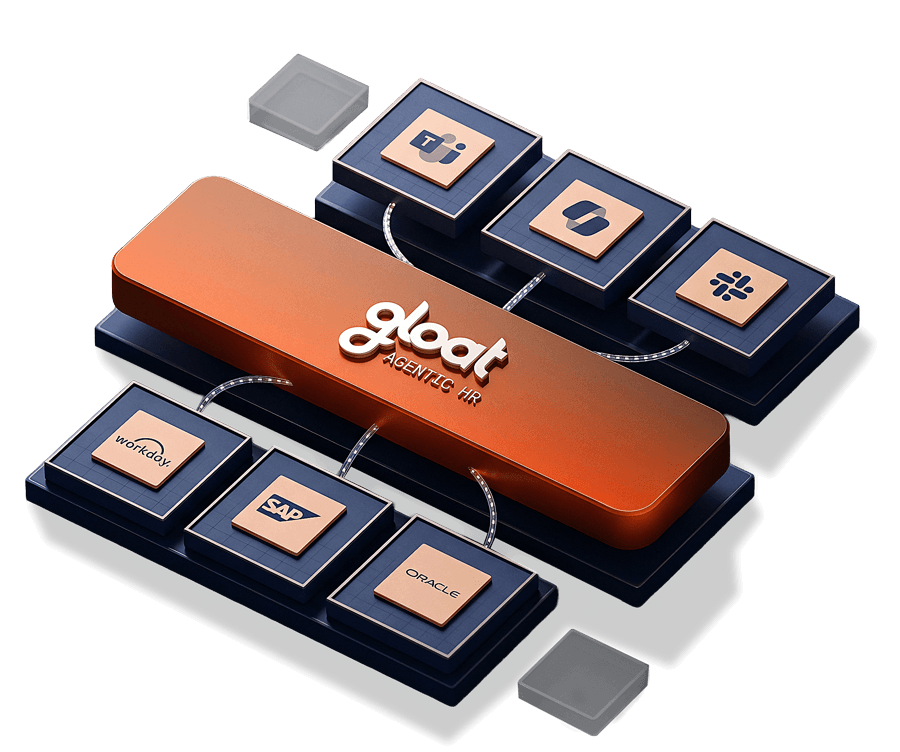
That’s exactly the clarity that Gloats agentic HR agents provide visibility into how AI will impact your specific roles and tasks, a blueprint for prioritizing change, and the ability to plan workforce transformations with confidence rather than guesswork.